
Choose portable or patio pizza ovens by the job your customers need to do, not by which photograph looks more powerful. For a brand or importer, the useful comparison includes placement, handling, fuel configuration, retail presentation and shipping package. Neither category alone establishes output, price, certification or availability.
What does each format mean in this collection?
The FLAMEBUILT pizza oven collection presents three photographed portable styles and a photographed twin-handle patio style; the brochure also documents a single-handle patio format. Start with these design directions, then confirm the details of the chosen model.
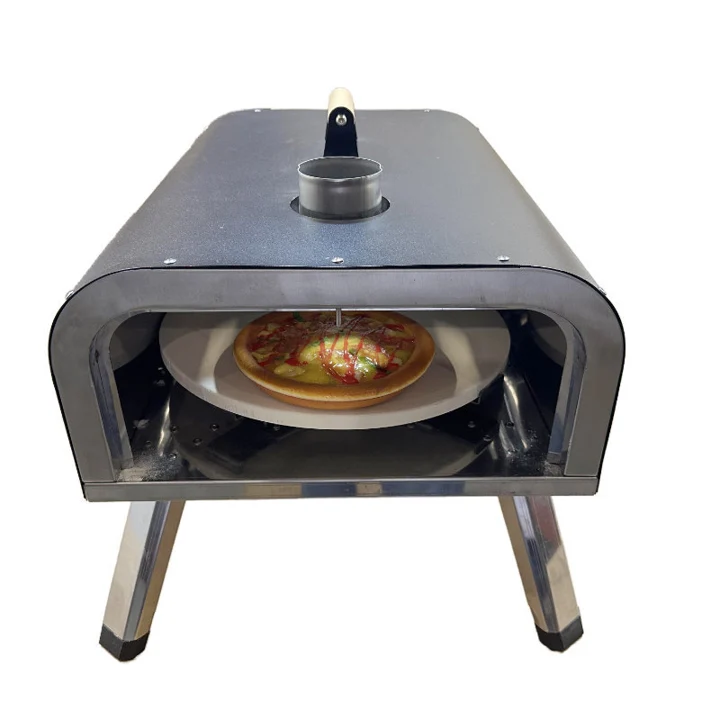
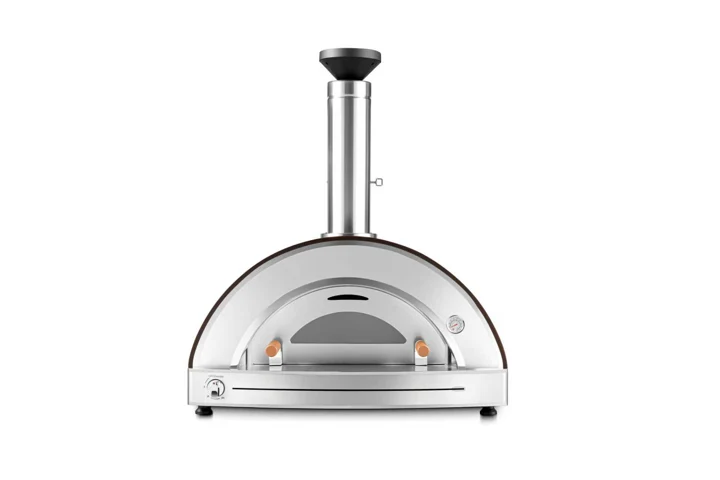
These are product-format references from the collection, not proof of interchangeable components or ready stock.
Which questions help you compare the two directions?
Swipe or scroll sideways to see all columns.
| Buying question | Portable shortlist | Patio shortlist |
|---|---|---|
| Where will customers place it? | Define the outdoor support surface and handling routine | Define the patio location, support and front working space |
| How will it be stored? | Check handles, removable components and packed layout by model | Check storage arrangements and the space required by the selected design |
| What will the retail offer include? | Identify the actual oven, bag, tools and any fuel components | Identify the door format, tools and included components |
| How will you ship it? | Obtain the final packed dimensions and weights | Obtain the final packed dimensions and weights |
| What performance must be checked? | Define the same relevant test conditions and acceptance criteria | Define the same relevant test conditions and acceptance criteria |
The table is a purchasing checklist, not a test-based ranking. Ask for missing information before calculating fulfilment costs or promising a performance level to your customers.
How does the sales channel change the brief?
A camping brand may prioritize a defined handling and storage routine. An ecommerce or DTC seller also needs clear package contents, customer instructions and a plan for spare parts. A distributor may need a coordinated assortment, retailer-facing information and shipment quantities for each configuration.
Describe those needs explicitly. Instead of asking for the “best portable oven,” say what the intended buyer must carry, store or assemble. Instead of asking for a “commercial patio oven,” define the intended use and the checks needed to support your positioning.
The goal is a realistic specification, not a universal statement that portable models are cheaper or patio models cook faster. Those conclusions need comparable quotations or test records for the selected designs.
Do fuel and rotation options follow the category?
No. Choose them by model. PT-PG1600 has documented fuel and rotation options, but these are not automatically features of every portable oven. A patio photograph is not proof that the same components are available for that format.
Read the fuel-options guide to separate model, fuel and included components. Define manual or optional motorized rotation only where applicable. Keep accessories separate from the base oven in the quotation request.
Which branding changes should you request first?
For an existing model, use Your Brand, Our Designs (ODM) and describe the logo, finish, packaging and accessories you want. Ask what can be retained and what requires development.
For a different body, opening, size or interface, discuss a structural development scope before expecting an existing-model quotation. Ask about drawings, tooling, samples and validation; do not assume a change can be approved from artwork alone.
How do you make a shortlist ready for quotation?
Select one or two formats and make a configuration record for each. Include target country, channel, expected first order, fuel preference, required changes and sample timing. Keep alternatives separate so a low-priced stripped configuration is not compared with a fully accessorized package.
Common mistakes are choosing by headline temperature, estimating shipping costs from the unpacked product, and treating photographed tools as standard. Use the OEM pizza oven checklist to connect the shortlist to sample and packing approval. The result should be two clearly defined buying options, not two unexplained pictures.